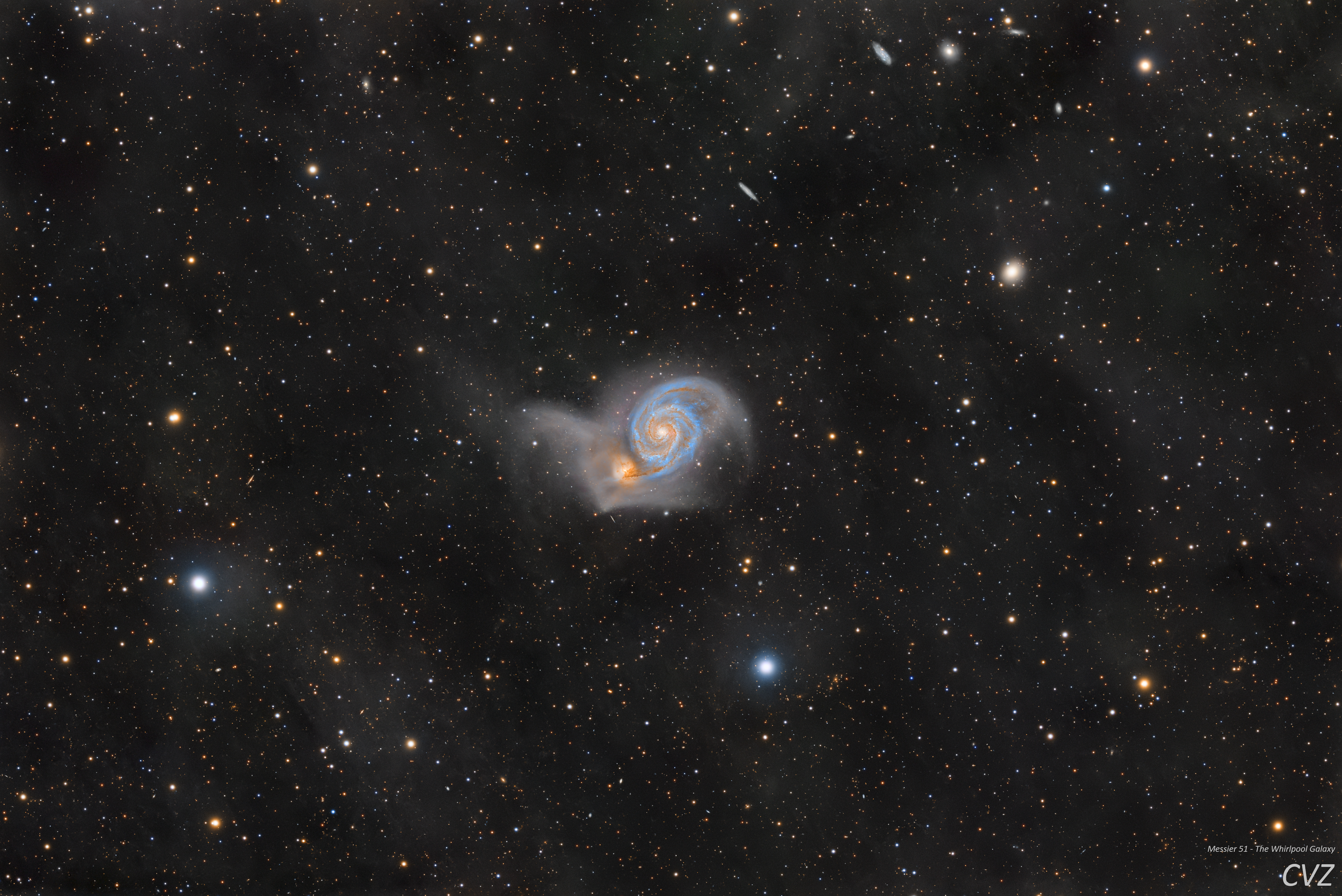

Messier 13 - The Great Hercules Cluster
Messier 13, also known as the Great Hercules Cluster, holds a special place for me because it was the very first star cluster I ever photographed. Back then, I used my old Omegon telescope and struggled to bring out the colors of the stars clearly. Despite my best efforts, the result was far from what I had hoped for.
Now, with a better camera and my Askar 103APO telescope, I decided to revisit this object. This time, the improvements really paid off. The colors of the individual stars have finally become visible, showcasing the rich diversity within the cluster. Messier 13, located about 22,000 light-years away in the constellation Hercules, is one of the brightest and largest globular clusters in the northern sky, containing several hundred thousand stars packed tightly together. Capturing this image also marked a small milestone for me, as it became the 50th Messier object I have photographed!
Hertzsprung-Russel diagram of Messier 13
Recently, I came across a new video on youtube by astronomer Adam Block. In that video, he explained that he found a Pixinsight script that enables astrophographers like myself to generate Hertzsprung-Russel diagrams based on Gaia data that has been integrated into images like mine through platesolving and spectrophotometric colour calibration. So I have tried it, and I was quite surprised by the results. The diagram clearly shows the main sequence stars and some giants that can be found in the Great Hercules Cluster. I think I’m going to generate these much more often, as they add some extra scientific depth to the images I post on my website.
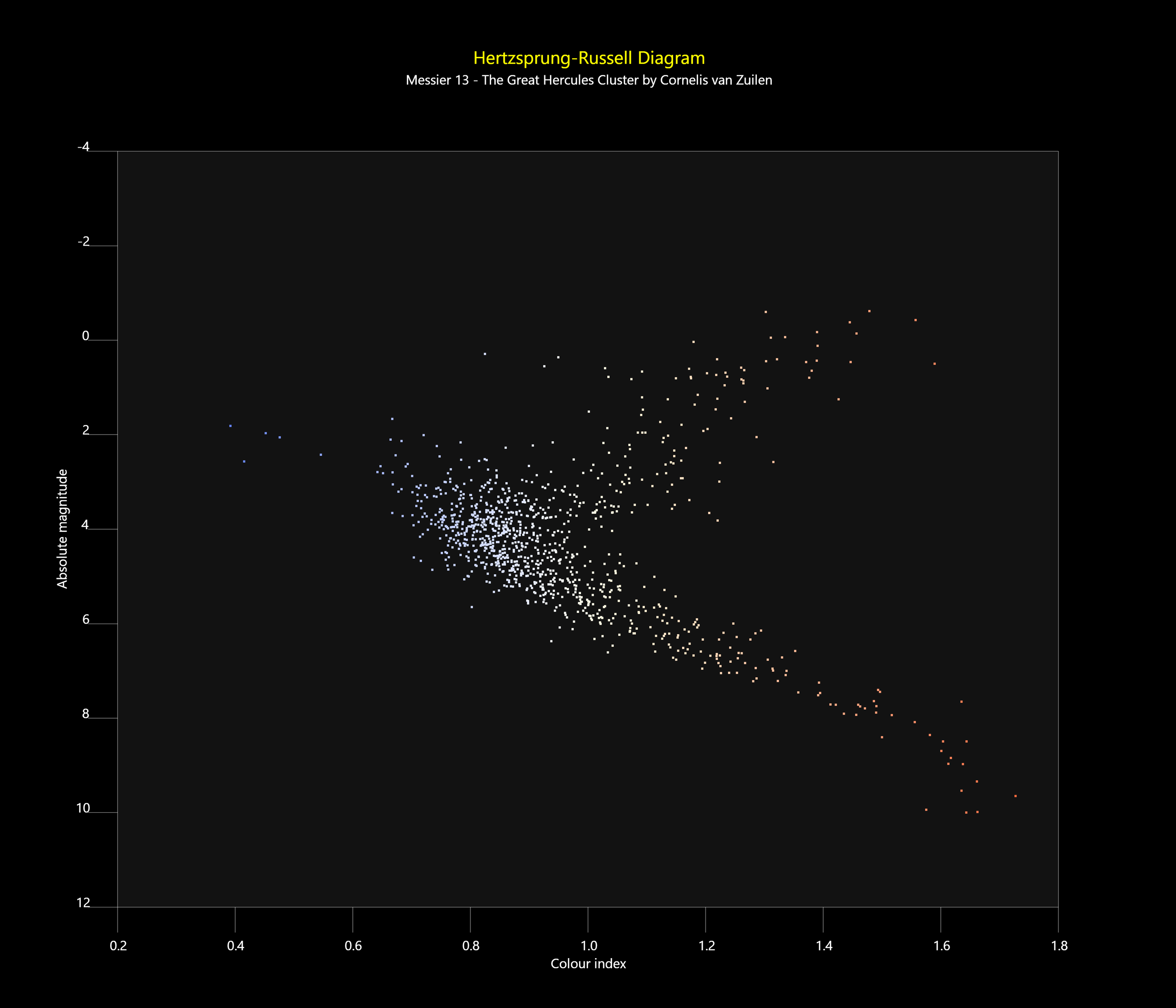
The Hertzsprung-Russel diagram of Messier 13, showing the lifecycle of stars
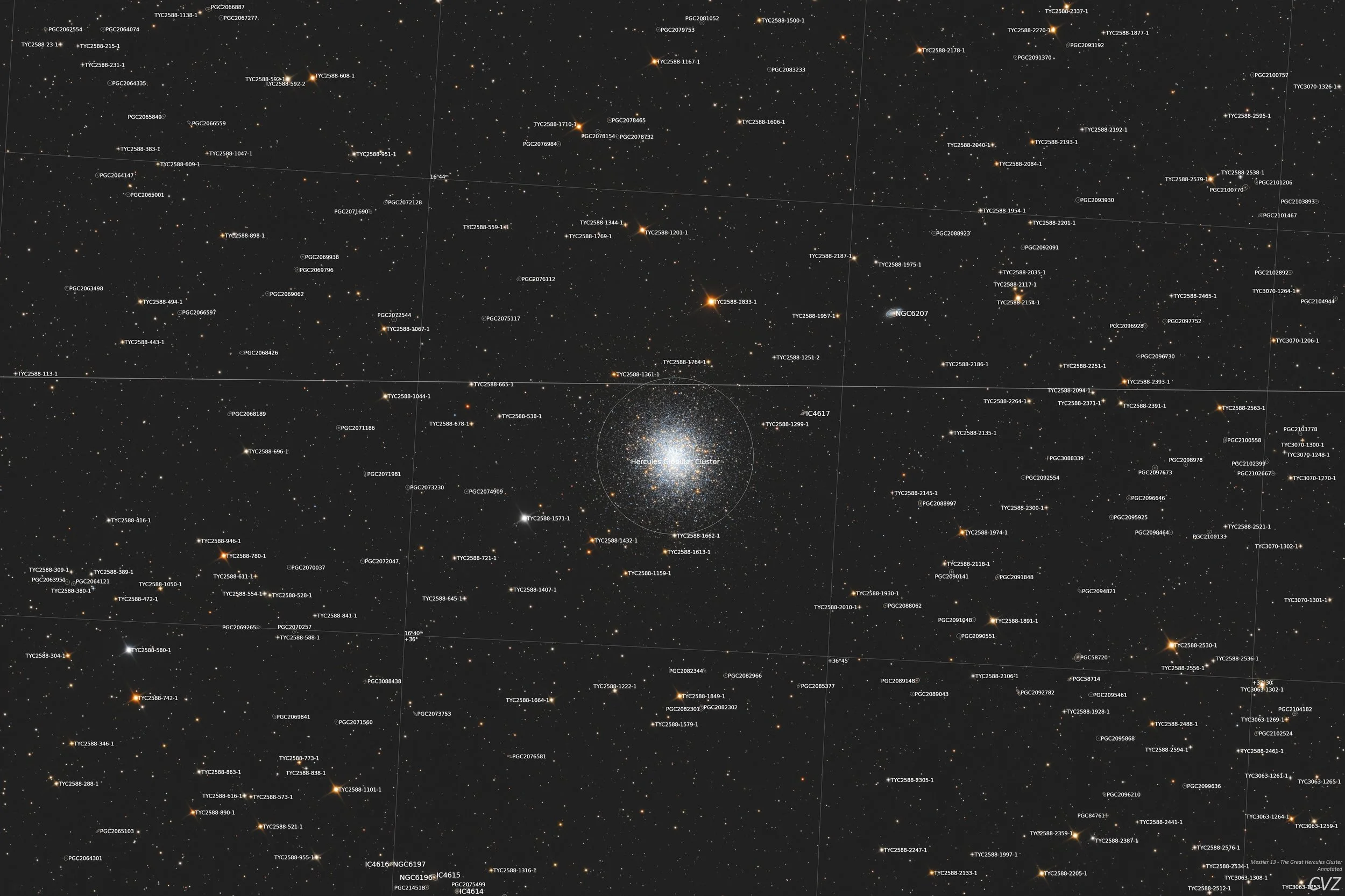
The fully annotated version of Messier 13 - The Great Hercules Cluster
Acquisition details:
Optolong L-Pro lights:
1hr 30min
30x 180sec
Calibration frames:
20 Darks
20 Flats
20 Biases
Bortle: 5
Gear used:
🔭 Askar 103APO
⚙️ Sky-Watcher EQ6-R Pro
📸 ZWO ASI2600MC AIR
🌌 Optolong L-Pro